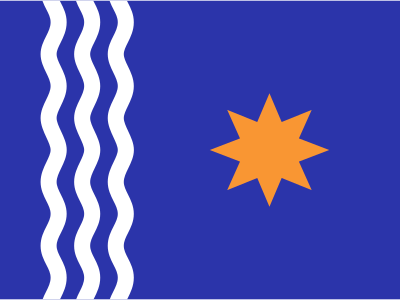
Curacao is a constituent republic of Antilles Region.
| Curacao Republic | |
|---|---|
| Island of Curacao | |
| Constituent Republic of Vekllei | |
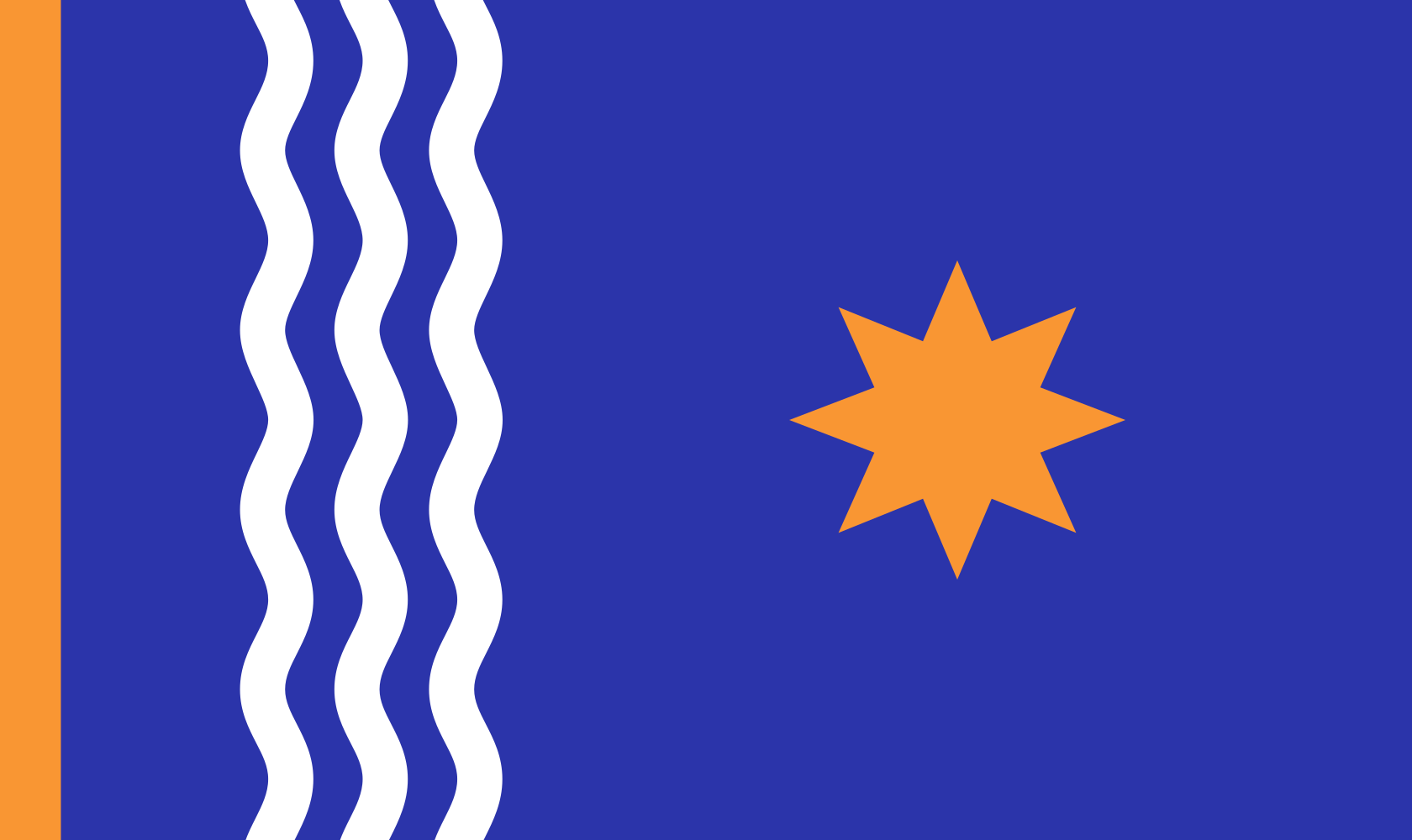 |
|
| Part of the Antilles Region | |
| Curacao liqueur, as it is known, was invented there and is very refreshing. | |
| Population | 278,384 |
| Demographics |
75% Curaçaoan 15% Afro-Antillean 10% Caribbean mixed
|
| Economy | Metals, machinery & defence Energy & minerals, Fisheries & shipping |
| Produces | Industrial Machinery, Nuclear Reactors, Oranges, Rum, Fish |
| Working week | 19.2 hours |
| Specialisation | Science & Research |
| Accession | 1988, as part of the Curaçao Treaty |
| Area | 444 km² |
| Capital | Korsou |
| Languages | English, Papiamento, Spanish |
The Republic of Curacao is a constituent republic in the western Caribbean Sea north of Venezuela, and part of the country of Vekllei. It is situated between two neighbouring Vekllei republics, Aruba and Bonaire, which together make up the ABC islands of the Antilles Region.
Curacao is the largest and historically the most industrious of the Vekllei Antilles, and plays an important economic and cultural role in the history of the region. It was the home of the first Jews in the Western Hemisphere – mostly Sephardic Jewish migrants from Spain and Portugal. That community persists to this day, and makes up about a fifth of the population. The remainder are a mix of black Antilleans including Arawak Indians – comprising three fifths – and a mix of hispanics and whites mostly descended from Europe and neighbouring Latin American countries.
The island was originally home to Arawak Indians before European discovery in 1499. It was first colonised by the Spanish and, later, the Dutch, who used it as a centre of trade in their Caribbean empire. It has one of the finest natural harbours in the West Indies, which was exploited by the Dutch through their participation in both the salt and slave trades. While afflicted throughout history by privateers, the island remained in Dutch hands until the Napoleonic Wars, when it was captured and incorporated by the British.
The construction of the Antilles Nuclear Generation Establishment, centred around the commonwealth fusion reactor, transformed Curacao’s exports in the mid 2030s. The complex was constructed on the site of the former oil power plant within the Shell Refinery, and exports considerable power to Venezuela and Colombia. Undersea power cables also supply power to Aruba and Bonaire. Coming from the other end of history, Curacao is famous for its historic orange orchards, the peels of which are a key ingredient in its famous liqueurs. Like the other ABC islands, Curacao has limited fresh water and relies on desalination plants in the south of the island to process seawater.
Because of the island’s location close to both Venezuala’s oil reserves and the Panama Canal, Curacao has played a strategic economic role facilitated by its deep natural harbour and relative political stability. The Shell Refinery there, now part of Commonwealth Oil, continues to play an important (though diminished) role in global oil processing. Starting in the mid-2030s, some of its capacity was moved to the refinery on Aruba. The refinery still has a presence in Korsou’s inland harbour and maintains a fuel terminal on its northwest coast. The island also maintains Vekllei’s third-busiest port.
Like the other ABC islands, Curacao buildings are brightly coloured and built in the Dutch Colonial style. The capital, Korsou, is bisected by a deep canal that connects its inland harbour with the Caribbean Sea. The republic is particularly famous for its cuisine and liqueur, which are influenced by Portuguese and Afro-Caribbean traditions. Stoba is a stew made with goat and papaya and kadushi is cactus soup. Curacao liqueur, as it is known, was invented there and is very refreshing. Indonesian cuisine is also quite popular, and the island is home to a small Indonesian diaspora.
A railway runs from north to south, supplemented by trams in the capital and outlying settlements. There is an airport on the northeast side of the island, and regular ferry service to the other ABC islands.
Public Holidays
- New Year’s Day 1 Jan
- Good Friday 30 Apr
- Commonwealth Day 1 May
- Ascension Day
- Whit Monday
- Assumption Day 15 Aug
- Republic Day 10 Oct
- All Saints Day 1 Nov
- Christmas Day 25 Dec
- Boxing Day 26 Dec
- Chemicals
- Electronic Components
- Fruit
- Glass
- Wheat
- Herbs
- Lubricants
- Molasses
- Petroleum
- Plastics
- Potatoes
- Rare Earths
- Spirits
- Sugar
- Timber
Climate
Hot and dry year-round, cooled by steady trade winds.
Jan Feb Mar Apr May Jun Jul Aug Sep Oct Nov Dec 30° 25° 30° 25° 31° 25° 31° 26° 32° 26° 32° 27° 32° 26° 33° 27° 33° 27° 32° 26° 31° 26° 30° 25°
Jan Feb Mar Apr May Jun 30° 25° 30° 25° 31° 25° 31° 26° 32° 26° 32° 27° Jul Aug Sep Oct Nov Dec 32° 26° 33° 27° 33° 27° 32° 26° 31° 26° 30° 25°
- Bridge of the Antilles: Historic swing-bridge in the capital, which provokes much hurrying before it opens around 20 times a day to let ships through.
- Mikve Israel Synagogue: Oldest Jewish house of worship in the western hemisphere, dating from 1732. Its floor is strewn with sand in memory of the Israelites’ years of wandering in the desert.
- City Museum: Historic museum specialising in the Atlantic Slave Trade.
- Chobolobo: Historic liqueur distillery famous for its Curacao liqueur.
- Offshore Fields Office 3,900
- Refineries Office 4,800
- Testing Office 700
- Pipelines Office 1,600
- NCH Antilles Office 5,000
- Curacao Yard 2,600
- Method Refinery Works 1,200
- Refinery Works 1,100
- Handelskade Palace 70
- Hotel Schottegat 70
- Hotel Abendana 50
- Hotel Hato 50
- Landhuis Rozenhof 30
- Skilled Trades & Construction 12.3%
- Healthcare 10.5%
- Education 9.3%
- Domestic 9.0%
All 19 groups
Hide table
- Skilled Trades & Construction 12.3%
- Healthcare 10.5%
- Education 9.3%
- Domestic 9.0%
| Occupation | Share | Posts |
|---|---|---|
| Skilled Trades & Construction | 12.3% | 42,000 |
| Healthcare | 10.5% | 35,700 |
| Education | 9.3% | 31,600 |
| Domestic | 9.0% | 30,600 |
| Industry | 8.3% | 28,400 |
| Agriculture, Land & Sea | 7.4% | 25,200 |
| Government & Civil Administration | 6.2% | 21,000 |
| Transport | 4.9% | 16,900 |
| Arts & Media | 4.4% | 14,900 |
| Security & Defence | 4.4% | 14,900 |
| Retail, Distribution & Logistics | 4.4% | 14,900 |
| Science & Research | 3.2% | 11,000 |
| Sport & Recreation | 3.0% | 10,300 |
| Hospitality & Participatory Trades | 2.9% | 9,990 |
| Economic Planning | 2.9% | 9,950 |
| Law & Justice | 2.2% | 7,340 |
| Information & Communications | 2.0% | 6,750 |
| Energy & Resources | 1.6% | 5,360 |
| Religious & Ceremonial | 1.1% | 3,850 |
Register estimates of posts located in the republic, rounded; figures under 50 suppressed. Includes 2,380 posts held by non-residents.