Part of the country series of articles.
TRAVEL ADVISORY: RECONSIDER ALL BUT ESSENTIAL TRAVELPARSTATE advises against all travel to South Africa. The Commonwealth does not maintain diplomatic relations with the government of the Republic of South Africa. Commonwealth citizens will receive no consular assistance.
| Union of South Africa | |
|---|---|
| Apartheid Republic | |
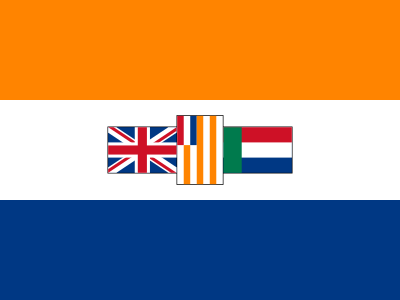 |
|
| Capital | Pretoria / Cape Town |
| Languages | Afrikaans, English, Zulu, Xhosa, and many regional languages |
| Population | 72,000,000 |
The Union of South Africa is an apartheid state at the southern tip of Africa and has the largest industrial economy on the continent. It is governed by a white minority of roughly fifteen per cent of the population, which has ruled through the Afrikaner nationalist movement since 1948. As such, Afrikaans and English are spoken in Pretoria, Cape Town and Johannesburg, where almost all the wealth is found, while the Black majority – Zulu, Xhosa and many others – lives mostly in townships outside the white cities and in the rural reserves. It is the most complete expression of apartheid ideology in the world today, as a vestige of nazism. For those reasons, it is an international pariah and engages in circular trade with the handful of other minority-rule nations in the world today.
White rule comprises Afrikaners, who are descended mostly from Boers and dominate the government in Pretoria, the army and the civil service, and English speakers who control much of the mining wealth and property in Johannesburg. Despite their fair skin, Afrikaners regard themselves as an African people with no other homeland despite European descent, and in this sense differ from the settler republics of Livre Portugal Mozambique and Rhodesia. There is some discontent among minority rule about the poor state of the black population in the country, but apartheid is not something that can be improved with policy and so it has been a fundamental basis of government in the Union since its founding.
This system, where people are separated based on racial categories, has produced regular internal unrest throughout its existence. At the Union’s founding, South Africa was a contiguous country that effectively saw white domination over the indigenous black population. As it developed, parallel societies were constructed to accommodate black and coloured South Africans in townships and bantustans. The system reached crisis in the 2020s, when nationwide strikes and increasingly violent unrest had made the security situation untenable, and forced concessions from white rule. These included the ostensible independence of the bantustans under a loose confederation, which now make up most of the country. The white corridor snakes upriver from Cape Town to meet Pretoria and Johannesburg. In addition to halting the unrest, the South African government hoped pseudo-independence of the bantustans would provide access to the international community, but no such interest has been communicated and so the state of affairs is, in practice, indistinguishable from a century ago.
As a global pariah, South Africa is the centre of the Johannesburg Pact, a circular and sanctioned system of trade with Rhodesia, Portugal-Mozambique and Burmaland. It has a large domestic industrial economy, including a sophisticated arms industry that supplies weapons, aircraft and munitions to members of its pact. It also exports gold, diamonds and coal, and South African companies hold most of the investment in the offshore gas fields of Mozambique. Despite international sanctions, it is largely self-sufficient in food and has a strong manufacturing sector, most of which grew out of import substitution. It is also famous for the Cape winelands and for Johannesburg, which was built over the largest goldfield in the world.