Part of the country series of articles.
TRAVEL ADVISORY: EXERCISE CAUTIONThe Commonwealth advises travellers to exercise caution in this country. Some areas or circumstances may carry elevated risk. Travellers should monitor local conditions and follow the guidance of local authorities.
| FSR Balkans | |
|---|---|
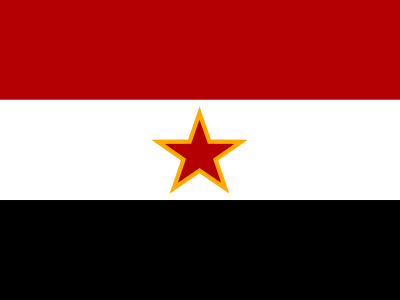 |
|
| Capital | Belgrade, SR Serbia |
| Languages | Serbo-Croatian, Montenegrin, Albanian, Romanian, Bulgarian, Macedonian, many others |
| Population | 61,392,400 |
The Federal Socialist Republic of the Balkans (FSR Balkans, commonly the Balkans) is a federal socialist republic in southeastern Europe and one of the most ethnically diverse countries in Europe. It extends from the Alps south to the western half of the Bosporus Strait and incorporates the city of Constantinople, which Turkish civic discourse still calls Istanbul. It comprises the historic Yugoslav republics of Serbia, Croatia, Bosnia and Montenegro alongside Albania, Bulgaria and Romania, and interethnic relations between them are administered under federal law. Perhaps because of that composition, its institutions are deliberately divided, with the executive seated in Belgrade, the legal capital at Sofia and the judicial capital at Constanta.
It is independent of the Soviet sphere despite its socialism, and is also a significant member of the non-aligned movement alongside India and Vekllei. That position has allowed it to keep economic and diplomatic ties with both blocs without formal alignment to either. Its economy is organised on market socialist principles, which makes it far more open than the planned economies to its north. Citizens may live and work abroad, and the country is also open to Western tourism and foreign investment. It has a strained but functional relationship with Turkey, which holds the eastern approaches to the strait, and a tense but economically important one with Greece to the south.