Part of the country series of articles.
TRAVEL ADVISORY: EXERCISE HEIGHTENED CAUTIONPARSTATE advises that recent religious violence in the state of Gujarat may escalate and endanger travellers. Take precautions to protect yourself and follow local advice.
| Republic of India | |
|---|---|
| Federal Republic | |
 |
|
| Capital | Baghnagar |
| Languages | Hindi, English, and many other languages |
| Population | 1.121 billion |
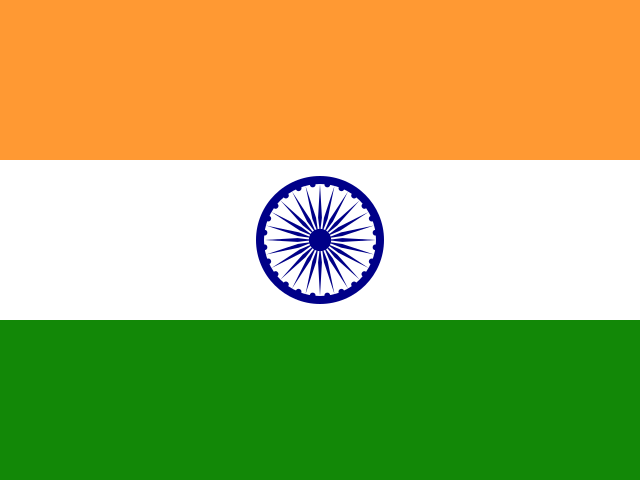
The Republic of India is a federal republic occupying most of the Indian subcontinent, independent since the dissolution of British colonial system in the postwar period. It is a pluralistic, complicated democracy with a diverse and energetic political history. Its independence was won largely through nonviolent protest, but the immediate years thereafter were shaped by assassinations, bombings and intense separatist violence. For most of the late 20th Century, political power in the country was under continuous Hindu nationalist influence. This ended with the Sarayu Affair in 1998, which restored pluralistic democracy and eased tensions with India’s many peripheral minority groups.
India is the second-most populated country in the world, and it is famous for its rich history and scale. Everything in India is big, and has become bigger as 21st Century as economic reforms have centralised industry and pursued urbanisation in methods that echo Soviet technocracy. India is now home to the world’s largest city (Delhi), and has the largest standing army and civil service. It is a founding member of the Non-Aligned Movement and maintains good, if noncommittal, relations with the great powers of the world. It maintains a large standing military and a domestic arms industry, and has fought several wars with Pakistan and China since independence. Relations with the Commonwealth are conducted through substantial bilateral trade and the presence of a large Indian diaspora across Commonwealth republics.