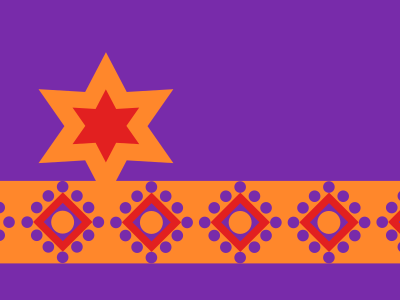
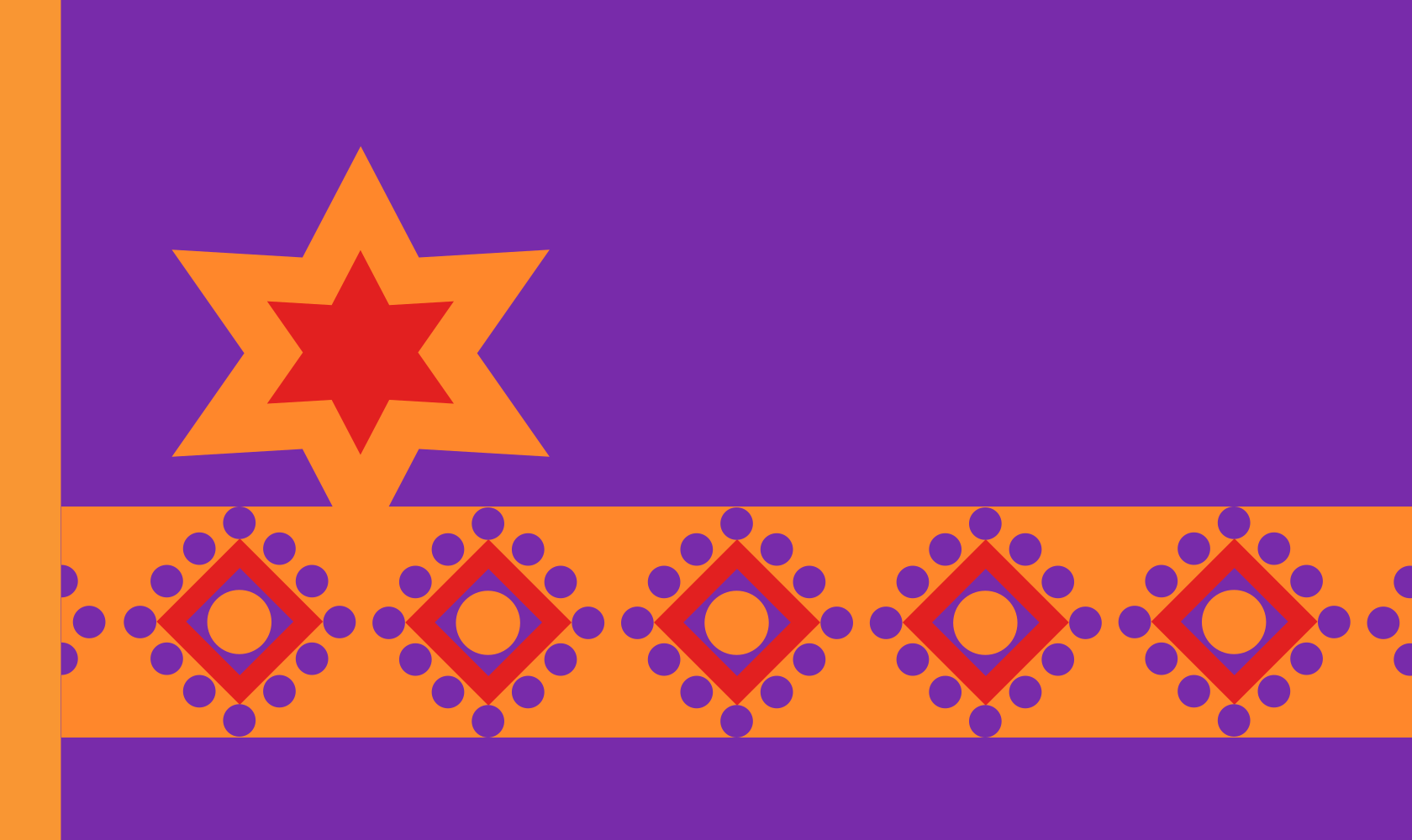
Bonaire is a constituent republic of Antilles Region.
| Bonaire Republic | |
|---|---|
| Island of Bonaire | |
| Constituent Republic of Vekllei | |
 |
|
| Part of the Antilles Region | |
| The island is famous for its colourful birds, beaches, and large salt flats in its south. | |
| Population | 40,493 |
| Demographics |
65% Afro-Antillean 20% Caribbean mixed 15% Other
|
| Economy | Fisheries & shipping Energy & minerals, Chemicals & medicine |
| Produces | Salt, Aloe, Herbs, Petroleum, Fish |
| Working week | 18.9 hours |
| Specialisation | Agriculture, Land & Sea |
| Accession | 1988, as part of the Curaçao Treaty |
| Area | 288 km² |
| Capital | Coral |
| Languages | English, Papiamento, Spanish |
The Republic of Bonaire is a constituent republic in the western Caribbean Sea north of Venezuela, and part of the country of Vekllei. It is found at the eastern end of an island chain including Aruba and Curacao, which together comprise the ABC islands. The capital is Coral, a derivative of the dutch name for its original settlement.
The northern part of the island is hilly, while the south is flat and dry and marked by an expansive solar salt works. The island is slightly banana-shaped, and curves around an island known as ‘Little Bonaire.’ Dry breezes score the island for much of the year, provoked by the strong trade winds to the north-east.
The history of the islands, originally uninhabited, is particularly grim even for the Caribbean – Bonaire was used by Dutch colonisers as a slave market, providing slaves to other Dutch islands to be exploited in plantations there. This legacy is clear in the majority African population that lives there today, in addition to Caribbean Indians and some Southern Europeans.
The island is famous for its colourful birds, beaches, and large salt flats in its south. The American Flamingo breeds there, and can be seen standing in the solar salt pools throughout the year. Life there is easy and quiet, and many young Bonaireans leave for Curacao or Aruba to seek out opportunity and excitement before returning later in life. They have a strong republican identity, and are proud of the comparative hardships and smallness of their island.
Agriculture in Bonaire is limited by its shortage of fresh water, and sustains only the local population. Its main exports – aloes and salt – require no water. Aloes are grown mostly in plantations in the hills above the capital, whereas salt is harvested by a municipal company from the large salt flats that dominate the south of the island. This salt, like many Vekllei exports, is mostly for domestic consumption and aids national self-sufficiency. There is very little heavy industry in the republic, though there is a large oil terminal for crude derivatives on the northwest coast. The terminal is a part of the broader ABC islands oil industry, and has close links with the super-refineries in Aruba and Curacao
A railway runs from the town of Rincon to the capital of Coral, and then south towards the salt walks. There is a local tram network and airport in Coral, as well as ferry service to Curacao.
Public Holidays
- New Year’s Day 1 Jan
- Good Friday 30 Apr
- Commonwealth Day 1 May
- Ascension Day
- Whit Monday
- Assumption Day 15 Aug
- Republic Day 6 Sep
- All Saints Day 1 Nov
- Christmas Day 25 Dec
- Boxing Day 26 Dec
- Fish
- Palm Oil
- Petroleum
- Salt
Climate
Hot and arid, tempered by constant trade winds.
Jan Feb Mar Apr May Jun Jul Aug Sep Oct Nov Dec 30° 25° 27° 25° 28° 25° 28° 25° 29° 26° 29° 26° 29° 27° 29° 27° 30° 27° 30° 27° 29° 26° 28° 25°
Jan Feb Mar Apr May Jun 30° 25° 27° 25° 28° 25° 28° 25° 29° 26° 29° 26° Jul Aug Sep Oct Nov Dec 29° 27° 29° 27° 30° 27° 30° 27° 29° 26° 28° 25°
- Pekelmeer: Flamingo sanctuary and site of historic slave and penal huts that housed salt workers.
- Boca Onima: Fine beach with caves filled with Arawak Indian art on the northwest coast.
- Cai Beach: Beautiful beach famous for its pink conch shells.
- Bonaire Municipal Salt Works: Centuries-old solar-evaporation salt works.
- Agriculture, Land & Sea 11.0%
- Education 10.7%
- Healthcare 10.2%
- Domestic 9.8%
All 19 groups
Hide table
- Agriculture, Land & Sea 11.0%
- Education 10.7%
- Healthcare 10.2%
- Domestic 9.8%
| Occupation | Share | Posts |
|---|---|---|
| Agriculture, Land & Sea | 11.0% | 5,440 |
| Education | 10.7% | 5,330 |
| Healthcare | 10.2% | 5,060 |
| Domestic | 9.8% | 4,870 |
| Skilled Trades & Construction | 9.7% | 4,810 |
| Government & Civil Administration | 6.6% | 3,260 |
| Industry | 6.2% | 3,070 |
| Transport | 5.0% | 2,490 |
| Arts & Media | 4.7% | 2,320 |
| Security & Defence | 4.5% | 2,240 |
| Retail, Distribution & Logistics | 4.0% | 2,010 |
| Economic Planning | 2.9% | 1,450 |
| Sport & Recreation | 2.9% | 1,420 |
| Hospitality & Participatory Trades | 2.8% | 1,410 |
| Law & Justice | 2.2% | 1,080 |
| Information & Communications | 2.0% | 980 |
| Science & Research | 2.0% | 970 |
| Energy & Resources | 1.8% | 890 |
| Religious & Ceremonial | 1.0% | 490 |
Register estimates of posts located in the republic, rounded; figures under 50 suppressed. Includes 410 posts held by non-residents.