Part of the country series of articles.
TRAVEL ADVISORY: NORMAL PRECAUTIONSThe Commonwealth advises travellers to exercise normal precautions when travelling in this country. Travellers should familiarise themselves with local laws and customs and consular availability.
| Republic of Hawaii | |
|---|---|
| Republic | |
 |
|
| Capital | Honolulu |
| Languages | Hawaiian, English, Japanese, Tagalog, and other Pacific languages |
| Population | 2,100,000 |
The Republic of Hawaii is a charming archipelagic republic in the central Pacific, midway between the American west coast and East Asia. Its native people are descendant of Polynesians, who colonised the islands sometime in the 11th Century. The islands were subsequently ruled by a series of chiefdoms until they were reorganised in the fashion of a Western monarchy upon exposure to the Western powers in the late 18th Century.
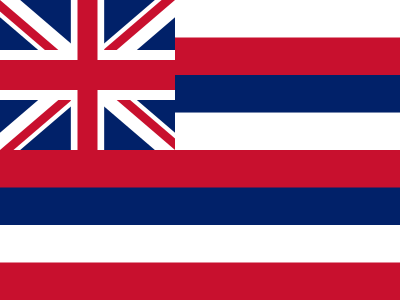
This exposure had a dramatic effect on Hawaiian way of life, and not just for the foreign diseases it introduced that reduced the population by half. Hawaii rapidly modernised, looking to the British as a model, and adopted the Union Jack as a national flag despite never being subjects of the British Empire. Throughout the 19th Century, the Hawaiian Kingdom was under intense pressure from the United States to make economic and military concessions, as they saw the archipelago as essential to their ambitions in the Pacific. This culminated in the Sugar Rebellion, which saw the burning of American plantations and the imposition of brutal reparations, including the concession of Ford Island as a permanent military base.
The government was reorganised in the mid-20th Century and peacefully transitioned to a parliamentary republic, though the royal lineages retain substantial influence in politics today. Honolulu, the capital, is one of the principal transshipment ports of the Pacific, and its low duties and excise have positioned it competitively against American ports. Historically aware of the United States, Hawaii has become a melting pot of the Asia-Pacific and its colonial powers too, and many Japanese, Philindonese and Koreans live there, alongside small numbers of British and miscellaneous Pacific Islanders. It has a prosperous economy centralised around finance and its ports.
English is the lingua franca, though native Hawaiian is still spoken and taught. Hawaiians enjoy legal privileges over land. It is a neutral country, eschewing even the Non-Aligned Movement, and has a substantial diplomatic presence.