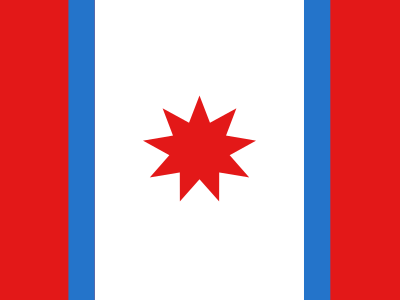
Graciosa is a constituent republic of Atlantic Region.
| Graciosa Republic | |
|---|---|
| Island of Graciosa | |
| Constituent Republic of Vekllei | |
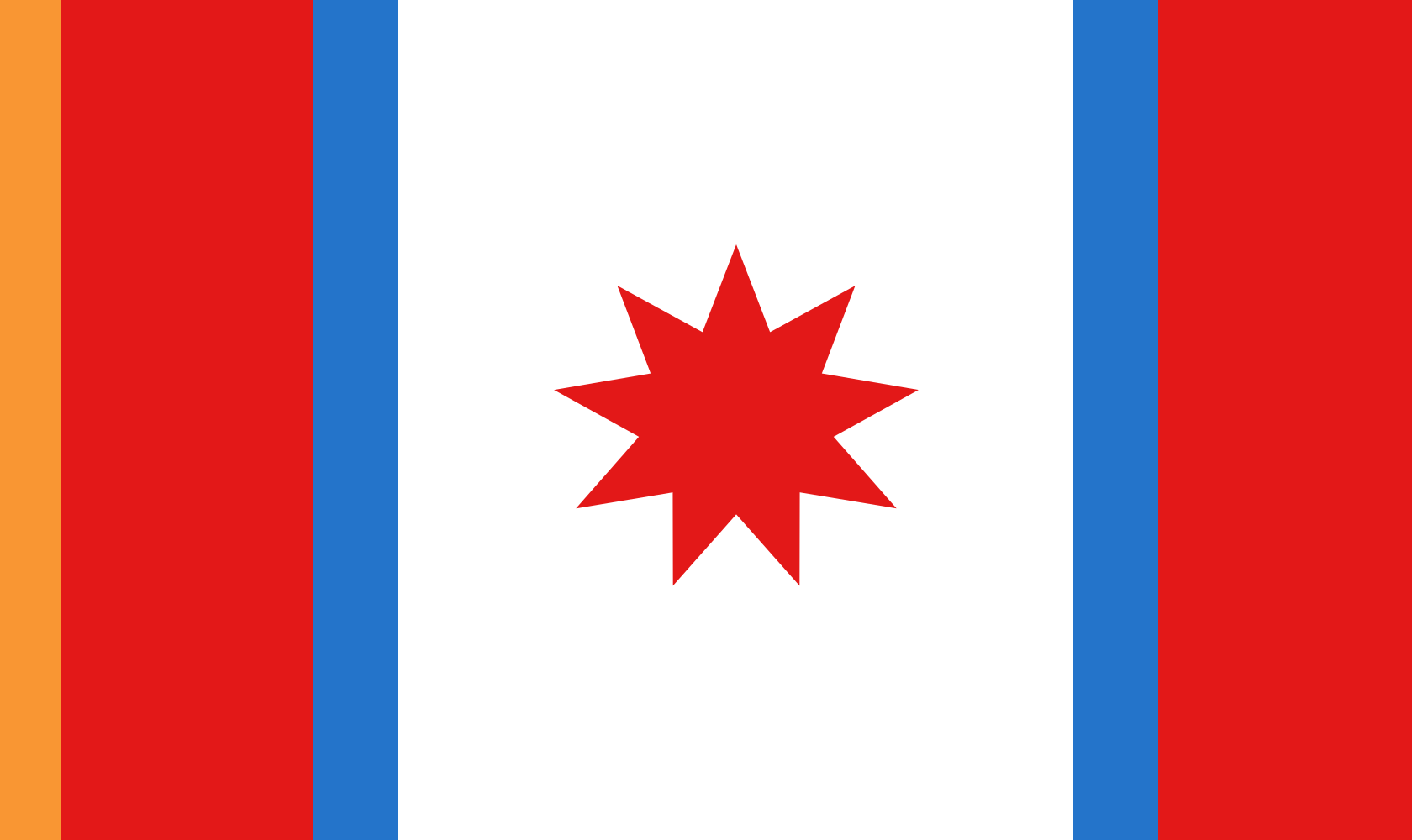 |
|
| Part of the Atlantic Region | |
| On the coast are the Carapacho Thermal Baths, famous for the medicinal quality of their water. | |
| Population | 62,745 |
| Demographics |
90% Azorean 6% European 2% African
2% other
|
| Economy | Livestock & dairy Orchards & fruit, Arable farming |
| Produces | Wine, Wool, Apples, Peaches, Plums |
| Working week | 19.1 hours |
| Specialisation | Agriculture, Land & Sea |
| Accession | 1982, as part of the Azores Delegation |
| Area | 60.65 km² |
| Capital | Dismas |
| Languages | English, Portuguese |
The Graciosa Republic is a constituent republic of Vekllei in the Atlantic Ocean, in the middle of the Azores archipelago. Although a volcanic island, it is mostly flat and does not share the dramatic terrain of its neighbours. Conspicuous and rolling hills characterise parts of its interior, and its southwest coast has steep cliffs.
The island is heavily deforested and covered by paddocks, orchards and grazing animals. The republic has a strong agricultural character reflected in its economy and lifestyle, and is famous for its wine and wool. A prevalence of homesteads, a Vekllei phrase here meaning self-sufficiency from the municipality, has encouraged some migration from aspirational farmers around the country.
In the southeast end of the republic, the enormous remains of a volcanic crater known as the Caldeira Massif can be found, now shrouded in forest. At the heart of the crater is a network of caves, through which the Ministry of Landscape has constructed paths to allow access to visitors. On the coast nearby are the Carapacho Thermal Baths, famous for the medicinal quality of their water.
Life in Graciosa has a tranquil and pastoral quality, and its agricultural roots has made it a popular place of pilgrimage for both homesteaders and the urban disaffected. Unlike much of Vekllei, where diets depend heavily on synthetic meats, Graciosa commonly consumes living meat – mostly lamb and some beef. The process of animal husbandry, animal raising and butchering has become a sacred process there, and one in which the entire community participates. Food preparation is still a communal activity on the island, and despite its 60,000 residents it still feels provincial.
Unlike most of the Vekllei Atlantic Region, little English is spoken there. Older persons may not speak any English at all, and communicate only in historic Portuguese. The volcanic soils on the island and agreeable climate produce abundant harvests, and many fruits, wine, cereals and cheeses are exported for the benefit of the rest of the country. In return, the federal government has invested heavily in transport links, a new hospital and the maintenance of historic churches there. Trams now connect all the villages of the island, and a narrow-gauge steam locomotive runs on weekends. A daily ferry connects Graciosa to the Velas republic.
- Wheat
- Grapes
- Livestock
- Milk
- Beans
- Sheep
Climate
Warm year-round, with humid and sub-Mediterranean weather. Because of its flat terrain it receives much less rainfall than its neighbours.
Jan Feb Mar Apr May Jun Jul Aug Sep Oct Nov Dec 16° 12° 17° 11° 17° 12° 18° 13° 19° 14° 21° 16° 24° 18° 25° 19° 24° 19° 22° 17° 19° 14° 18° 13°
Jan Feb Mar Apr May Jun 16° 12° 17° 11° 17° 12° 18° 13° 19° 14° 21° 16° Jul Aug Sep Oct Nov Dec 24° 18° 25° 19° 24° 19° 22° 17° 19° 14° 18° 13°
Public Holidays
- New Year’s Day 1 Jan
- Republic Day 15 Feb
- Carnival
- Good Friday
- Easter
- Commonwealth Day 1 May
- Azores Day 1 Jun
- Corpus Christi
- Assumption Day 15 Aug
- All Saints Day 1 Nov
- Feast of Imm. Con. 8 Dec
- Christmas Day 25 Dec
- Furna do Enxofre: A unique volcanic cave featuring an underground sulphur lake, accessible by a spiral staircase and known for its impressive natural architecture.
- Caldeira da Graciosa: Colcanic caldera surrounded by hiking trails and scenic viewpoints.
- Praia de São Mateus: A small, popular beach with calm waters, perfect for swimming and sunbathing, located near the village of São Mateus.
- Santa Dismas: The island’s main town, featuring charming cobblestone streets, traditional Azorean architecture, and the historic Santa Dismas Church.
- Termas do Carapacho: Natural hot springs on the coast, known for their therapeutic properties and a relaxing atmosphere overlooking the Atlantic Ocean.
- Monte de Nossa Senhora da Ajuda: Hilltop chapel that has panoramic views of the island and the ocean.
- Graciosa Wine Museum: A museum dedicated to the island’s wine production, showcasing traditional wine-making methods and local grape varieties.
- Agriculture, Land & Sea 14.0%
- Education 11.3%
- Healthcare 10.9%
- Skilled Trades & Construction 9.0%
All 19 groups
Hide table
- Agriculture, Land & Sea 14.0%
- Education 11.3%
- Healthcare 10.9%
- Skilled Trades & Construction 9.0%
| Occupation | Share | Posts |
|---|---|---|
| Agriculture, Land & Sea | 14.0% | 10,500 |
| Education | 11.3% | 8,520 |
| Healthcare | 10.9% | 8,210 |
| Skilled Trades & Construction | 9.0% | 6,790 |
| Domestic | 8.2% | 6,130 |
| Industry | 6.5% | 4,880 |
| Government & Civil Administration | 5.4% | 4,090 |
| Transport | 4.9% | 3,670 |
| Arts & Media | 4.6% | 3,500 |
| Security & Defence | 4.6% | 3,440 |
| Retail, Distribution & Logistics | 3.6% | 2,700 |
| Economic Planning | 3.1% | 2,320 |
| Sport & Recreation | 2.7% | 2,040 |
| Information & Communications | 2.2% | 1,670 |
| Hospitality & Participatory Trades | 2.2% | 1,650 |
| Law & Justice | 2.2% | 1,620 |
| Science & Research | 2.1% | 1,550 |
| Energy & Resources | 1.6% | 1,170 |
| Religious & Ceremonial | 1.0% | 740 |
Register estimates of posts located in the republic, rounded; figures under 50 suppressed. Includes 170 posts held by non-residents.
-
1982
Remaining Azores territories accede, including Costa Verde, Fayal, Flores, Graciosa, Maria, Mira, Pico, Porto Santo, Terceira, and Velas