Part of the country series of articles.
| People's Republic of Manchuria | |
|---|---|
| People’s Republic | |
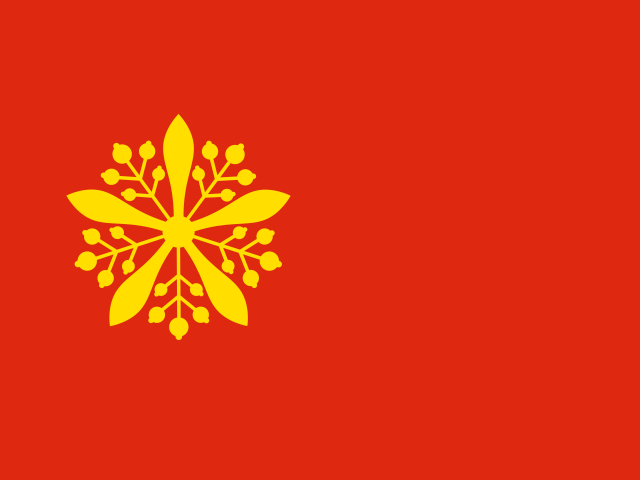 |
|
| Capital | Harbin |
| Languages | Mandarin, Manchu, Korean, Russian, and many regional languages |
| Population | 68,200,000 |
The People’s Republic of Manchuria is a Soviet-aligned state in northeast Asia, established following the Red Army’s occupation of the region at the close of the Second World War. Although the population is overwhelmingly Han Chinese, the country maintains a distinct Manchurian civic identity drawing on the old Manchu imperial legacy and frontier history. China regards the republic as a national humiliation of the same order as Taiwan and maintains pressure on its borders through sporadic artillery fire and periodic military threats.
The country operates with a degree of personal and economic freedom that distinguishes it from comparably positioned Soviet-aligned states. Foreign businesses operate in its cities, citizens travel with relative ease by regional standards and remittances constitute a significant source of foreign currency. Relations with Korea and Japan are commercially productive, grounded in the heavy industrial infrastructure the Japanese built during the occupation period and which Soviet investment subsequently expanded. Manchuria is a major producer of steel and photoelectrics, and its technical workforce is in demand across the region.