Part of the country series of articles.
TRAVEL ADVISORY: EXERCISE HEIGHTENED CAUTIONPARSTATE advises that China periodically experiences mass mobilisations and political upheaval, which can occur with little or no warning. The ability of the Commonwealth to provide consular assistance in rural areas is limited.
| People's Republic of China | |
|---|---|
| People’s Republic | |
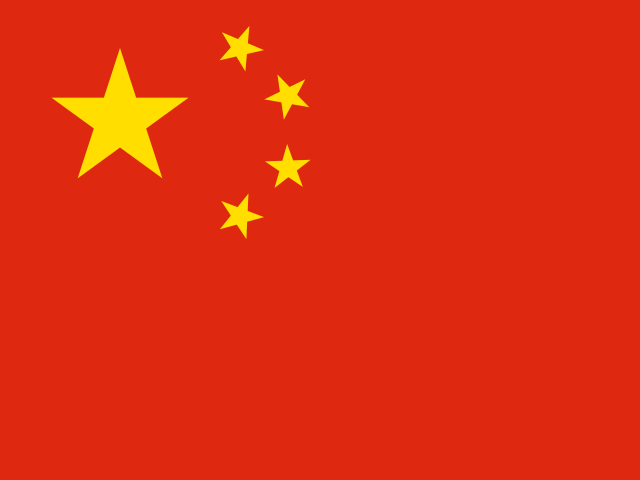 |
|
| Capital | Beijing |
| Languages | Mandarin, Cantonese, and many regional languages |
| Population | 1,242,000,000 |
The People’s Republic of China is a Maoist single-party state in East Asia and one of the world’s major powers. Since the founding of the republic in 1949, the country has undergone several self-described revolutions, each directed at correcting the errors of the previous one. The party apparatus is simultaneously the most centralised institution in the world and one of the most volatile; policies introduced by the central leadership have been repudiated within a decade by the same government. China maintains territorial claims on both Manchuria and Taiwan and asserts these claims regularly.
China regards the Soviet Republics as revisionists who have betrayed the international communist project, and this position shapes much of its foreign policy. It competes with the Soviets for influence across Southeast Asia and Africa, backing third-worldist movements and governments to limit Soviet alignment. Its support for these movements has been inconsistent in practice, but China’s size and ideological output make it a persistent factor in regional politics. Its relationship with the Kingdom of Laos is the clearest expression of this competition: China backs the monarchy against the Soviet-aligned Lao PDR in order to check Soviet expansion in mainland Southeast Asia.