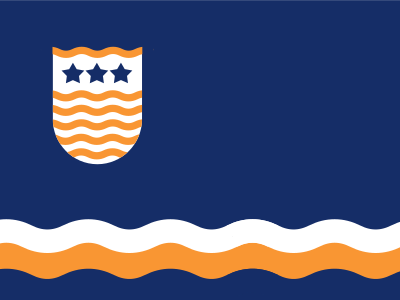
Caimanas is a constituent republic of Antilles Region.
| Caimanas Republic | |
|---|---|
| Archipelago of the Cayman Islands | |
| Constituent Republic of Vekllei | |
 |
|
| Part of the Antilles Region | |
| Caimanas is the westernmost Vekllei republic, and has a distinct local culture and lingua franca called Caimana English. | |
| Population | 412,830 |
| Demographics |
60% Afro-Antillean 15% Scattered communities 15% Caribbean mixed
10% other
|
| Economy | Fisheries & shipping Orchards & fruit, Food & drink |
| Produces | Fish, Shellfish, Lobster, Preserved Foods, Rum |
| Working week | 19.4 hours |
| Specialisation | Economic Planning |
| Accession | 1836, as part of the British Atlantic Territories |
| Area | 259 km² |
| Capital | Tortuga |
| Languages | English, Caimanas English |
The Republic of Caimanas is a constituent republic in the western Caribbean Sea, and part of the country of Vekllei. It is a city-state archipelago of 3 main islands, of which Grand Caimana is the most developed. The archipelago lies 500km northwest of Jamaica, and south of Cuba.
The islands were originally settled by pirates and shipwrecked sailors in the 17th Century, who found no indigenous population living there. The UK acquired the islands as part of the 1670 Treaty of Madrid, but were unable to exercise settlement until the 1730s. As was the case across most British Caribbean territories, slaves were brought to the Caimanas over the following two centuries until the abolition of the practice in 1833. The islands were briefly administered as part of the Colony of Jamaica before becoming part of the British Atlantic Territories in 1836, and eventually Vekllei.
The islands have few natural resources and have to import much of their goods and construction material. Food is also imported, but programmes undertaken by the Bureau of Agriculture have supplemented imports through the development of large community gardens and light farms. Today, the local economy is dominated by professional services including education, training, the civil service and finance. The national Ratings Corporation is headquartered there, as well as the Blacktown Factory which hosts many foreign workers. The island also sees some domestic tourism from other Vekllei republics, who come to see its dive sites and coral reefs.
Caimanas is the westernmost Vekllei republic, and in many ways carries on the culture of opportunism and independence that characterised its early years. It has a distinct local culture and lingua franca, called Caimana English influenced by West African and Guinea Coast languages. Locals go in for Anglo-Carib and Afro-Carib fare like cassava, jerk seasoning and meat pies. They consume a lot of seafood, mostly grouper and snapper.
The capital of Tortuga is home to most of the republic’s population, and resembles many other Vekllei Caribbean cities. It is low-rise and lush with gardens and parks. All three islands have tram service, and Grand Caimana has a railway running from its east to west ends. Little Caimana is home to the archipelago’s international airport, as well as Air Station Caimana, which is a major military installation. All islands are linked by hydrofoil ferries.
Public Holidays
- New Year’s Day 1 Jan
- Ash Wednesday
- Good Friday
- Easter Monday
- Commonwealth Day 1 May
- Constitution Day 1st Mon in Jul
- Republic Day 15 Dec
- Christmas Day 25 Dec
- Boxing Day 26 Dec
- Adhesives
- Ammunition
- Electronic Components
- Fruit
- Glass
- Molasses
- Paper
- Photo-electric Computers
- Plastics
- Printing Ink
- Pulp
- Rare Earths
- Salt
- Sugar
- Timber
- Vegetables
- Vinegar
Climate
Tropical marine, hot and humid, with a wetter season from May to November.
Jan Feb Mar Apr May Jun Jul Aug Sep Oct Nov Dec 28° 23° 29° 23° 29° 23° 30° 24° 31° 25° 32° 26° 32° 26° 32° 26° 32° 26° 31° 25° 30° 25° 29° 24°
Jan Feb Mar Apr May Jun 28° 23° 29° 23° 29° 23° 30° 24° 31° 25° 32° 26° Jul Aug Sep Oct Nov Dec 32° 26° 32° 26° 32° 26° 31° 25° 30° 25° 29° 24°
- Seven Mile Beach: A world-renowned beach on Grand Caimana, known for its white sand and clear waters.
- Stingray Town: A popular shallow sandbar where visitors can interact with and feed southern stingrays.
- Caimana Botanic Gardens: A botanical garden on Grand Caimana, showcasing native flora and the endangered Blue Iguana.
- Cayman Turtle Centre: A conservation and education centre where visitors can learn about sea turtles and other wildlife.
- Pedro St. James: A historic building known as “the birthplace of democracy” in the Caimanas Islands, offering tours and exhibits on the islands’ history.
- Caimana Brac Caves: Natural limestone caves on Caimana Brac, popular for exploration and offering dramatic views of the landscape.
- Caimana Islands Dockyards: Major port and drydocks located just outside of Tortuga.
- Argo Meridian House 1,600
- Tortuga Yard 6,800
- Caimanas Airfield 1,330
- Caimanas Barracks 1,620
- Seven Mile House 30
- The Bodden 70
- Hotel Royal 50
- The Bluff Lodge 30
- Ebanks Diving Lodge 30
- Education 10.3%
- Agriculture, Land & Sea 10.0%
- Healthcare 9.5%
- Skilled Trades & Construction 9.4%
All 19 groups
Hide table
- Education 10.3%
- Agriculture, Land & Sea 10.0%
- Healthcare 9.5%
- Skilled Trades & Construction 9.4%
| Occupation | Share | Posts |
|---|---|---|
| Education | 10.3% | 52,100 |
| Agriculture, Land & Sea | 10.0% | 50,200 |
| Healthcare | 9.5% | 47,900 |
| Skilled Trades & Construction | 9.4% | 47,600 |
| Domestic | 8.8% | 44,400 |
| Security & Defence | 7.6% | 38,200 |
| Economic Planning | 7.2% | 36,100 |
| Industry | 6.4% | 32,300 |
| Government & Civil Administration | 5.7% | 28,800 |
| Transport | 4.4% | 22,300 |
| Arts & Media | 4.1% | 20,700 |
| Retail, Distribution & Logistics | 4.0% | 20,000 |
| Sport & Recreation | 2.8% | 14,100 |
| Hospitality & Participatory Trades | 2.4% | 12,100 |
| Science & Research | 1.8% | 9,060 |
| Law & Justice | 1.8% | 8,960 |
| Information & Communications | 1.5% | 7,800 |
| Energy & Resources | 1.4% | 7,080 |
| Religious & Ceremonial | 0.8% | 3,990 |
Register estimates of posts located in the republic, rounded; figures under 50 suppressed. Includes 8,390 posts held by non-residents.
-
1836
The British Overseas Territories comprising Oslola, Kala and Demon are reincorporated as the British Atlantic Territories, including Anguilla, Lucaya, Habacoa, Summers, the Virgin Islands, the Cayman Islands ( Caimanas), the Falklands, Montserrat ( Allia), Saint Helena ( Helena), Ascension ( Ascension), the Tristan da Cunha Islands ( Santes), the South Georgia and Sandwich Islands ( Sude), and the Turks and Caicos ( Caicos) Islands
-
1833
Slavery is abolished in the Caimanas
-
1670
The Cayman Islands come under British control via the Treaty of Madrid