Part of the country series of articles.
TRAVEL ADVISORY: EXERCISE CAUTIONCollectivities in Iberia exercise a degree of autonomy, and security arrangements and local customs vary. Consult local authorities for more information.
| Iberia | |
|---|---|
| Federal Republic | |
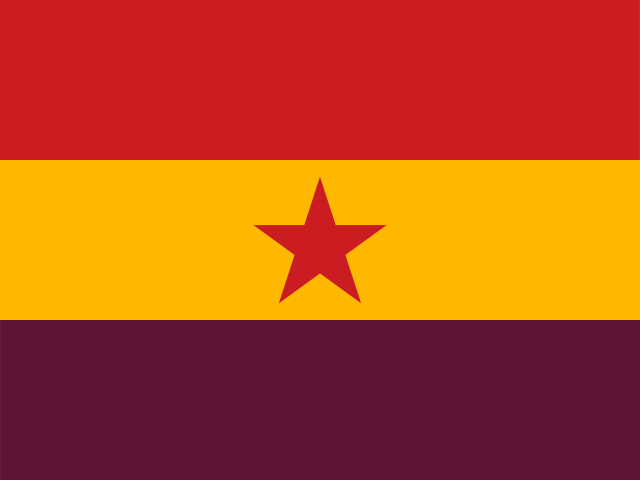 |
|
| Capital | Barcelona |
| Languages | Spanish, Portuguese, Catalan, Galician, Basque |
| Population | 58,112,000 |
The Iberian Federation (commonly Iberia) is a federal republic occupying the Iberian Peninsula in southwestern Europe, formed following the Spanish annexation of Portugal in 1955. The federation is governed from Barcelona and encompasses the former territories of both states, with Portugal constituted as a constituent state retaining substantial internal autonomy.
Contemporary Iberian politics begins with the Spanish Civil War and the assassination of Spanish president Javier Marx in 1955, which precipitated a conflict with Portugal. The subsequent war ended the Portuguese Estado Novo regime in Europe, resulted in annexation and led to the decolonisation of most of the former Portuguese empire. Seperatism remains a major concern and the federation maintains an assertive internal security service.
The Iberian economy includes a tradition of village-level collectivities that operate alongside the market economy, particularly in rural areas. These arrangements bear some structural resemblance to the Vekllei commons and predate the federation. Iberia is less wealthy than most of its European neighbours but exports agricultural produce, textiles and manufactured goods across the continent.