Part of the country series of articles.
TRAVEL ADVISORY: EXERCISE HEIGHTENED CAUTIONPARSTATE advises that the risk of violent crime in some Latin African cities remains high, and travellers should exercise caution when travelling along rural roads.
| Latin African United Republics | |
|---|---|
| Federal Republic | |
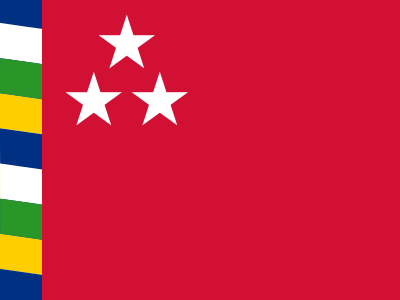 |
|
| Capital | Libreville |
| Languages | French, and many indigenous languages |
| Population | 42,822,215 |
The Latin African United Republics (also Latin Africa) is a federal republic on the west coast of Africa, straddling the Equator in the south and reaching north into central Africa. It comprises most of the former French colonies north of the former Belgian Congo and is organised into 28 states drawn to match distinct cultural and linguistic groups, which is an unusual basis for a federation and has worked better than most observers expected.
Latin Africa is a major regional power with substantial natural resources and an internal political environment that has been stable for long enough to be worth remarking on. It keeps close relations with France, its former colonial power, while taking an active part in pan-African and non-aligned forums, and supplies arms and military training to the liberation movements operating against the white minority governments in Rhodesia and South Africa. It also came close to preventing a genocide within its own borders in the last century, an episode that is taught in every Latin African school and mentioned in very few foreign accounts of the federation.
The 28 states are represented in a communal assembly called the High Council, where the informal negotiation happens before the formal parliamentary proceedings do. Federal authority covers security and common infrastructure, and the states keep broad domestic autonomy over everything else.
Exports are cash crops, principally coffee and sugar, alongside oil and bauxite. Libreville, the capital, houses the regional headquarters of a great many multinational corporations and has become the commercial gateway for most of the countries around it, a position it has held long enough that the neighbours have stopped contesting it.