| Antigua Republic | |
|---|---|
| Island of Antigua | |
| Constituent Republic of Vekllei | |
 |
|
| Part of the Kalina Commonwealth | |
| Accession | 1836, as part of the British Atlantic Territories |
| Area | 281 km² |
| Capital | Caribbea |
| Languages | English, Arawak Creole |
| Population | 327,800 |
The Antiguan Republic is a constituent republic of Vekllei in the Kalina archipelago, northeast of Allia and south of Barbary. It is roughly triangular, with an intricate coastline ringed by smaller islands and islets. Redonda, a small uninhabited island used historically for guano mining, lies between Allia and Oualie.
Antigua was originally inhabited by Arawaks, who were displaced by Caribs in the 12th Century. Antigua still has a large indigenous Carib minority population today. It was discovered by Europeans in the 15th Century and colonised by the British 200 years later. Antigua acted as a gateway for British interests in the Caribbean, and became a very successful sugar plantation with the labour of enslaved Caribs and Africans. Production there was disturbed by slave rebellions, but remained lucrative until the abolishment of slavery in the 19th Century, from which it declined for the next 100 years.
In place of sugar, Antigua has had to leverage its history as an entrepôt and invested in its education sector. Antigua is the site of the original Commonwealth National University of the West Indies ( CUWI) campus, founded in 1849. Today, education makes up most of the Antiguan economy, and is a primary destination for students relocating from smaller neighbouring islands like Allia and Karu. It is also a major sponsor of foreign exchange and overseas study for the wider Caribbean, and hosts several prestigious international schools. It is home to the headquarters of the Curriculum and Qualifications Council.
Antigua is mostly flat, with hills in its southwest culminating in Independence Peak at 400m. Settlements and agriculture cover most of the flat land, the largest of which is the capital, Caribbea. Its prosperous colleges and universities are located there, and the settlements leading southeast are involved in tropical crops and textiles. Cosgrove, in Antigua’s southwest coast, is the site of a major Universal Cotton factory, which serves as a regional ginning and spinning hub for the improved Sea Island cotton grown across the northern Kalina republics.
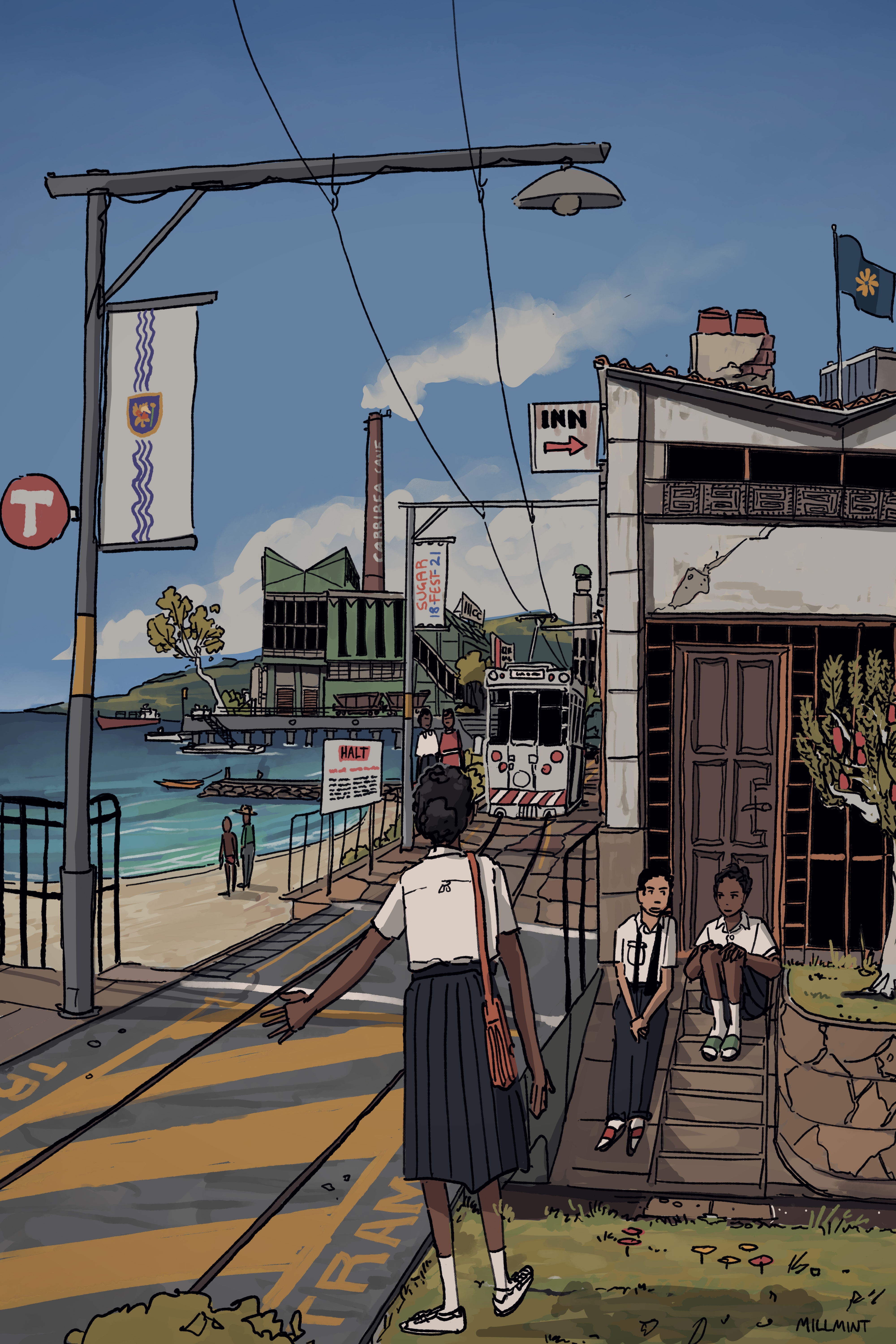
Fast hydrofoils leave Caribbea’s port daily, collecting students from neighbouring islands. V.C. Bird International is its major airport and has daily service to other parts of Commonwealth Kalina. Two main rail lines run across and around the island respectively, and both Caribbea and Cosgrove have tram networks. Caribbea is also home to Naval Station Antigua, the second-largest naval service base and dockyard in Kalina.
- Adhesives
- Ammunition
- Barley
- Electronic Components
- Fabric
- Fruit
- Glass
- Leather
- Molasses
- Palm Oil
- Paper
- Plastics
- Printing Ink
- Pulp
- Rare Earths
- Salt
- Sea Island Cotton
- Silk
- Sugar
- Timber
- Vegetables
- Vinegar
- Water
- Wheat
- Wool
- Universal Cotton Plant of the West Indies: Large textiles manufacturer that produces much of Vekllei’s clothing output in the Kalina region.
- Commonwealth Industrial Caribbean Bank: Modernist bank headquarters that regularly hosts visitors from the US and Central America.
- Antigua Recreational Grounds: Large cricket stadium and host of the North Kalina Regional Cup.
- Dickenson Bay: Beautiful white beach with old-fashioned promenade and arcade.
- Nelson’s Dockyard: Historic British naval dockyard open to the public, now part of Naval Station Antigua.
- Devil’s Bridge: Eroded limestone arches, rumoured to be the site of mass suicides during the slavery era.
- Antigua National Gallery: Cosmopolitan and modern art, and the stomping ground of emerging student artists.
- Curriculum and Qualifications Council: Develops and regulates the national curriculum and standard examinations in Vekllei.
- The Admiral's Inn Restored 18th-century naval building in the heart of Nelson's Dockyard.
- Caribbean Hospitality Institute Regional education centre for the hospitality and tourism sectors.
- Commonwealth Women's Penitentiary Antigua Federal custodial facility for women sentenced by Commonwealth courts, located in Antigua with access to Commonwealth medical services.
- Caribbea Metropolitan Railway Major urban transit system serving Caribbea.
- Dockyard Heritage Line Historic rail service serving the Nelson's Dockyard UNESCO site.
- Coastal Express Railway Company Coastal rail system serving the primary interior areas.
- University of Antigua Prestigious constituent university of the CUWI system renowned for its world-class medical and dental programs.
- Naval Station Antigua Naval Station Antigua is a naval station of the Vekllei Armed Forces, located in the republic of Antigua. Home to the Police Detachment of the National Littoral Training School.
- Commonwealth Forensic Science Laboratory National laboratory for criminal investigation and forensic services.
-
1924
The Caribbean Quarterly journal is founded in Antigua to catalogue regional studies
-
1849
Royal University of the West Indies is founded in Antigua, the predecessor to the University of Antigua
- 1695
-
1492
Antigua is discovered by Europeans
-
1200
Arawaks are displaced by Caribs in Antigua
- 1100